


More trees and diverse forage could help livestock farmers prepare for extreme weather
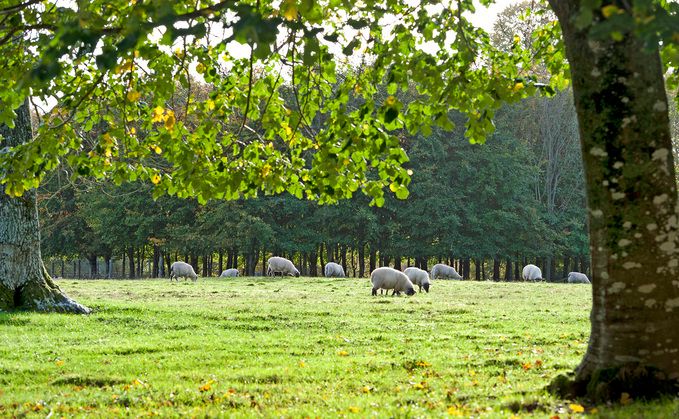
Three drought years in the last five have underlined the impact of increasingly unpredictable weather on agriculture, prompting calls for livestock farmers to rethink traditional grassland systems. At a climate resilience meeting hosted by Catchment Sensitive Farming at Thorpe Farm, Hathersage, experts explored how intensive grassland farms could adapt, with a focus on tree planting and herbal leys.
Jemma Davie, applied climate scientist at the Met Office, warned that summer heat and drought, alongside wetter winters, will present significant challenges. In the East Midlands, the number of summer days with temperatures high enough to cause noticeable heat stress in livestock could rise from two to six. By 2050, four years in ten could experience drought conditions, while winters with significantly above-average rainfall could become three times more frequent.
The benefits of trees on livestock farms
Dr Laura Cumplido-Marín, agroforestry specialist at the Forestry Commission, highlighted how trees can help livestock farmers adapt. “Trees can have a range of positive effects on grassland systems, as they reduce surface and air temperatures in hot weather and enable increased water infiltration and water holding capacity during prolonged rainfall periods,” she said.
Tree cover can reduce heat stress in livestock, helping dairy cows maintain forage intake and milk yields during hot weather. Trees can also improve soil structure, reduce run-off and poaching, and potentially extend the grazing season. Browsing provides additional nutritional benefits, with trees such as willow offering compounds that can help livestock health. Research has also shown that condensed tannins in willow can reduce methane emissions by up to 27%.
Farmers should consider their objectives before planting, including whether trees are intended for shade, browsing, timber or fruit production. The Forestry Commission can help develop agroforestry plans, while grants may be available towards planting, fencing and associated infrastructure.
Diversifying forage supplies
Alongside agroforestry, herbal leys could help improve resilience to drought and reduce reliance on artificial nitrogen fertiliser.
Ben Rodgers, Catchment Sensitive Farming adviser, said: “Perennial ryegrass is hard to beat in optimum growing conditions with a predictable climate and where nitrogen fertiliser can be applied economically. But with droughts becoming more commonplace and high nitrogen fertiliser prices, herbal leys can be competitive in a range of situations.”
Trials in the Peak District have shown that, during drought years, second-cut yields from herbal leys receiving little or no artificial nitrogen can be 50-100% higher than comparable ryegrass fields. Short-term forage crops can also help build resilience. Rye, Westerwolds and Italian ryegrass offer opportunities to make better use of winter and early-season growth, helping to build forage reserves when summer yields are compromised.
Future-proofing livestock businesses
Combining tree planting with more diverse forage systems could help farmers improve livestock welfare, protect soils, manage water and maintain production as weather patterns change.
Low Carbon Agriculture, returning to the NEC Birmingham alongside LAMMA and CropTec in 2027, brings together farmers, landowners and industry experts to explore practical approaches to climate-friendly farming.
Register to discover the latest innovations, insights and solutions helping to build more resilient and sustainable farm businesses.
Register for your FREE early-bird ticket today!